
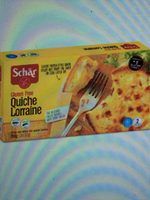
Quiche Lorraine
Processing
4
Ultra-processed
Group 4 of 4 on the NOVA scale
Additives listed
14
1 we grade moderate or higher
8 of them not yet assessed here
Nutrients
–
Nothing above the low band
Or no figures recorded at all
Three separate readings, kept apart on purpose. This is not a score, and none of it says this product is harmful.
Additives (14)
This label lists 3 antioxidants, 3 thickeners and gelling agents, 2 acidity regulators, 2 raising agents, 1 anticaking agent, 1 colour, 1 flavour enhancer and 1 preservative.
E251
Sodium nitrate
Preservative, cured meats and some cheeses
What it is. A curing agent that slowly converts to nitrite in the product, giving a longer acting preservative effect.
Why it is used. Used in dry cured meats and a few traditional cheeses.
What the evidence says. Sits under the same processed meat evidence as nitrite, since it ends up as nitrite in the food. Same practical takeaway: the issue is regular processed meat intake, not a trace in one meal.
Permitted with maximum levels, tightened in the EU alongside nitrite.
Assessed against IARC, EFSA, UK FSA. Full entry for E251
E407
Carrageenan
Thickener and stabiliser
What it is. A gel forming fibre extracted from red seaweed.
Why it is used. Thickens dairy, plant milks, desserts and some processed meats.
What the evidence says. Food grade carrageenan is permitted. A degraded form called poligeenan is harmful, but that is not what goes into food. Some lab and animal work links carrageenan to gut inflammation, which keeps it under review, but human evidence is limited and mixed.
Permitted, including in organic food in many places, though a few specialist products avoid it as a precaution.
Assessed against EFSA, JECFA. Full entry for E407
E160A
Carotenes
Yellow to orange colour
What it is. The orange pigments found in carrots and other vegetables, either extracted or made synthetically.
Why it is used. Colours margarine, soft drinks, dairy, and sweets.
What the evidence says. The same compound the body turns into vitamin A, and safe at the levels used in food. High dose beta-carotene supplements have been linked to harm in smokers, but those doses are far above anything a colour in food delivers, and conflating the two is a common mistake.
Permitted. The supplement findings apply to concentrated doses, not to food colouring.
Assessed against EFSA, JECFA. Full entry for E160A
E330
Citric acid
Acidity regulator
What it is. A mild acid found naturally in citrus fruit, made commercially by fermentation.
Why it is used. Adds tartness, balances flavour and helps preserve. One of the most used additives in food.
What the evidence says. Safe at food levels. No credible health concern for the additive itself.
Permitted freely.
Assessed against EFSA, JECFA. Full entry for E330
E415
Xanthan gum
Thickener and stabiliser
What it is. A fibre made by fermenting sugars with a bacterium, which thickens liquids at very low doses.
Why it is used. Thickens sauces and dressings and gives structure to gluten free baking.
What the evidence says. Passes through largely undigested and is treated as safe by regulators, with no numerical intake limit. Very large amounts act as fibre does, which is a digestive effect rather than a safety one.
Permitted freely.
Assessed against EFSA, JECFA. Full entry for E415
E621
Monosodium glutamate
Flavour enhancer
What it is. The sodium salt of glutamate, an amino acid found naturally in tomatoes, cheese and mushrooms.
Why it is used. Boosts savoury, umami flavour in stocks, crisps, ready meals and sauces.
What the evidence says. The old idea of MSG causing headaches and flushing, once called Chinese restaurant syndrome, has not held up in controlled trials. Regulators worldwide treat it as safe at normal intake. A genuinely useful example of a feared additive that the evidence exonerates.
Permitted and classed as safe. Adds to total sodium, so it counts towards salt if a product uses a lot.
Assessed against EFSA, JECFA, US FDA. Full entry for E621
Also on the label, not assessed here yet
- E304 Fatty acid esters of ascorbic acid antioxidant
- E306 Tocopherol-rich extract antioxidant
- E316 Sodium erythorbate antioxidant
- E412 Guar gum thickener
- E450 Diphosphates raising agent
- E452 Polyphosphates acidity regulator
- E500 Sodium carbonates raising agent
- E570 Fatty acids anticaking agent
Names and jobs come from the register of additives permitted in Great Britain, which we have not finished transcribing: a code shown without a name is a gap in our coverage, not a finding that it is unapproved. Naming one is not grading it either. Full detail appears only where we have an assessment against a named authority, so all of this describes our coverage rather than these additives. Most are common and low concern.
Ingredients
Water, Maize Starch, Smoked Bacon: [Pork 85%, Water, Salt, Stabilisers: (Di, Tri and Polyphosphates), Natural Colouring, Sugars: (Dextrose, Lactose, Maltodextrose), Thickener: (Carrageenan), Antioxidant :(Sodium Erythorbate), Flavour Enhancer: (Mono Sodium Glutamate), Aroma, Yeast Extract, Preservative: (Sodium Nitrate)]; Cheddar Cheese (_Milk_), _Milk_ Powder, Margarine: [Palm Oil, Rapeseed Oil, Water, Emulsifiers: (Mono - and Diglicerydes of Fatty Acids, Esters of Fatty Acids and Polyglycerol), Salt, Antioxidants: (Ascorbyl Palmitate, Extracts of Tocopherols), Aroma, Acidity Regulator: (Citric Acid), Colour: (Beta-Carotene)], Lard, Egg Powder, Rice Flour, Pasteurised Whole Egg, Whey Powder (_Milk_), Potato Starch, Onion, Cheese Powder (_Milk_): Cheese, Emulsifying Salt: Sodium Phosphate)], Thickeners: (Guar Gum, Xanthan Gum), Raising Agents: (Disodium Pyrophosphate, Sodium Bicarbonate).
As printed on the pack, in the producer's own order: ingredients are listed by weight, so what comes first is most of what is in it. E numbers link to their assessment where we have one.