
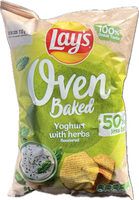
oven baked yoghurt with herbs flavour
Processing
4
Ultra-processed
Group 4 of 4 on the NOVA scale
Additives listed
5
0 we grade moderate or higher
2 of them not yet assessed here
Fat per 100g
14g
Medium
UK FSA front of pack threshold
Three separate readings, kept apart on purpose. This is not a score, and none of it says this product is harmful.
Additives (5)
This label lists 3 acidity regulators, 1 emulsifier and 1 flavour enhancer.
E471
Mono- and diglycerides of fatty acids
Emulsifier
What it is. Fat derived emulsifiers, closely related to ordinary dietary fats.
Why it is used. One of the most used additives in food: bread, margarine, ice cream, cakes and sauces.
What the evidence says. The body handles these much as it handles other fats, and EFSA's re-evaluation raised no safety concern at the levels used. They sit in the same broad emulsifier and gut microbiome research question as the others, which remains unsettled.
Permitted without a numerical limit. The fat source is not always stated, which matters for some diets rather than for safety.
Assessed against EFSA. Full entry for E471
E330
Citric acid
Acidity regulator
What it is. A mild acid found naturally in citrus fruit, made commercially by fermentation.
Why it is used. Adds tartness, balances flavour and helps preserve. One of the most used additives in food.
What the evidence says. Safe at food levels. No credible health concern for the additive itself.
Permitted freely.
Assessed against EFSA, JECFA. Full entry for E330
E621
Monosodium glutamate
Flavour enhancer
What it is. The sodium salt of glutamate, an amino acid found naturally in tomatoes, cheese and mushrooms.
Why it is used. Boosts savoury, umami flavour in stocks, crisps, ready meals and sauces.
What the evidence says. The old idea of MSG causing headaches and flushing, once called Chinese restaurant syndrome, has not held up in controlled trials. Regulators worldwide treat it as safe at normal intake. A genuinely useful example of a feared additive that the evidence exonerates.
Permitted and classed as safe. Adds to total sodium, so it counts towards salt if a product uses a lot.
Assessed against EFSA, JECFA, US FDA. Full entry for E621
Also on the label, not assessed here yet
- E270 Lactic acid acidity regulator
- E296 Malic acid acidity regulator
Names and jobs come from the register of additives permitted in Great Britain, which we have not finished transcribing: a code shown without a name is a gap in our coverage, not a finding that it is unapproved. Naming one is not grading it either. Full detail appears only where we have an assessment against a named authority, so all of this describes our coverage rather than these additives. Most are common and low concern.
Ingredients
kartupeļu pārslas (59 %), ciete, rapšu eļļa, cukurs, sūkalu pulveris no piena, emulgatori (lecitini, taukskābju mono - un diglicerīdi), sāls, ķiploku pulveris, garšas pastiprinataji (mononātrija glutamāts, dinātrija 5'-ribonukleotidi), kālija hlorīds, dekstroze, skabuma regulētāji (ābolskābe, citronskābe, pienskābe), aromatizētāji, Spolu pulveris, jogurta pulveris no piena, garšaugi (pētersīļi, piparmētra, dilles), Var saturet soju un kviešus, leteicams līdz: skatīt pakas priekšpusē
As printed on the pack, in the producer's own order: ingredients are listed by weight, so what comes first is most of what is in it. E numbers link to their assessment where we have one.