
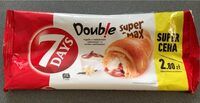
Double super max
Processing
4
Ultra-processed
Group 4 of 4 on the NOVA scale
Additives listed
11
0 we grade moderate or higher
6 of them not yet assessed here
Fat per 100g
28g
High
UK FSA front of pack threshold
Three separate readings, kept apart on purpose. This is not a score, and none of it says this product is harmful.
Additives (11)
This label lists 2 emulsifiers, 2 preservatives, 2 thickeners and gelling agents, 1 acidity regulator, 1 antioxidant, 1 carrier, 1 flour treatment agent and 1 raising agent.
E202
Potassium sorbate
Preservative
What it is. The potassium salt of sorbic acid, which stops mould and yeast growth.
Why it is used. Used in cheese, baked goods, dried fruit, wine and dressings.
What the evidence says. Widely used and long regarded as one of the gentler preservatives. EFSA's 2015 re-evaluation lowered the acceptable daily intake and noted gaps in the genotoxicity data, asking for more work, while finding no evidence of harm at the levels actually used.
Permitted with maximum levels. EFSA has asked for further data rather than restricted it.
Assessed against EFSA. Full entry for E202
E338
Phosphoric acid
Acidity regulator
What it is. A strong food acid that gives cola drinks their sharpness.
Why it is used. Used in colas and some processed foods to control acidity.
What the evidence says. EFSA set a group acceptable daily intake for phosphates in 2019 and noted that high consumers, particularly children, can exceed it once all sources are counted. The concern is total phosphate intake across the diet rather than one drink, and it matters most for people with reduced kidney function.
Permitted with maximum levels, under a group limit shared with the other phosphate additives.
Assessed against EFSA. Full entry for E338
E466
Carboxymethyl cellulose
Thickener and stabiliser
What it is. A modified plant fibre used to thicken and stabilise.
Why it is used. Common in ice cream, low fat products, gluten free bakery and sauces.
What the evidence says. Falls in the same emulsifier and gut research bucket as polysorbate 80, with early human work hinting at effects on the microbiome. Interesting, not conclusive.
Permitted with limits.
Assessed against EFSA. Full entry for E466
E471
Mono- and diglycerides of fatty acids
Emulsifier
What it is. Fat derived emulsifiers, closely related to ordinary dietary fats.
Why it is used. One of the most used additives in food: bread, margarine, ice cream, cakes and sauces.
What the evidence says. The body handles these much as it handles other fats, and EFSA's re-evaluation raised no safety concern at the levels used. They sit in the same broad emulsifier and gut microbiome research question as the others, which remains unsettled.
Permitted without a numerical limit. The fat source is not always stated, which matters for some diets rather than for safety.
Assessed against EFSA. Full entry for E471
E300
Ascorbic acid (vitamin C)
Antioxidant
What it is. Vitamin C, added to protect colour and flavour and sometimes to fortify.
Why it is used. Stops browning in juices and cut fruit, protects fats, and boosts vitamin content.
What the evidence says. Beneficial and harmless at the levels used. Included here as a reminder that an E number is just a code, and plenty of them are ordinary nutrients.
Permitted freely, no concern.
Assessed against EFSA, JECFA. Full entry for E300
Also on the label, not assessed here yet
- E1510 Ethanol carrier
- E282 Calcium propionate preservative
- E401 Sodium alginate thickener
- E450 Diphosphates raising agent
- E475 Polyglycerol esters of fatty acids emulsifier
- E920 L-cysteine flour treatment agent
Names and jobs come from the register of additives permitted in Great Britain, which we have not finished transcribing: a code shown without a name is a gap in our coverage, not a finding that it is unapproved. Naming one is not grading it either. Full detail appears only where we have an assessment against a named authority, so all of this describes our coverage rather than these additives. Most are common and low concern.
Ingredients
Mąka pszenna, olej palmowy, cukier, gluten pszenny, odtłuszczone mleko w proszku, syrop glukozowo-fruktozowy, olej słonecznikowy, drożdże, kakao w proszku o obniżonej zawartości tłuszczu (0,5%), emulgatory (mono - I diglicerydy kwasów tłuszczowych, estry kwasów tłuszczowych i poliglicerolu), dekstrozy, sól jodowana, alkohol etylowy, aromat, substancje konserwujące (propionian wapnia, sorbinian potasu), żółtko jaja w proszku, stabilizator (guma celulozowa), regulatory kwasowości (kwas fosforowy, difosforany), laktoza (z mleka), substancja żelująca (alginian sodu), środki do przetwarzania mąki (kwas askorbinowy, L-cysteina).
As printed on the pack, in the producer's own order: ingredients are listed by weight, so what comes first is most of what is in it. E numbers link to their assessment where we have one.