
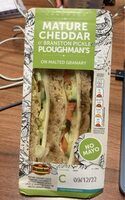
Mature Cheddar and Branston Picke
Processing
4
Ultra-processed
Group 4 of 4 on the NOVA scale
Additives listed
4
0 we grade moderate or higher
1 of them not yet assessed here
Fat per 100g
10.20g
Medium
UK FSA front of pack threshold
Three separate readings, kept apart on purpose. This is not a score, and none of it says this product is harmful.
Additives (4)
This label lists 2 colours, 1 antioxidant and 1 emulsifier.
E471
Mono- and diglycerides of fatty acids
Emulsifier
What it is. Fat derived emulsifiers, closely related to ordinary dietary fats.
Why it is used. One of the most used additives in food: bread, margarine, ice cream, cakes and sauces.
What the evidence says. The body handles these much as it handles other fats, and EFSA's re-evaluation raised no safety concern at the levels used. They sit in the same broad emulsifier and gut microbiome research question as the others, which remains unsettled.
Permitted without a numerical limit. The fat source is not always stated, which matters for some diets rather than for safety.
Assessed against EFSA. Full entry for E471
E100
Curcumin
Yellow colour
What it is. The yellow pigment from turmeric root.
Why it is used. Colours mustards, sauces, dairy, confectionery and savoury snacks.
What the evidence says. A plant pigment people have eaten as a spice for a very long time, and regulators treat it as safe with an acceptable daily intake. EFSA noted that children who eat a lot of the foods it is used in could approach that intake, which is a reason to watch total use rather than a sign of harm.
Permitted with maximum levels in the foods where it is allowed.
Assessed against EFSA, JECFA. Full entry for E100
E300
Ascorbic acid (vitamin C)
Antioxidant
What it is. Vitamin C, added to protect colour and flavour and sometimes to fortify.
Why it is used. Stops browning in juices and cut fruit, protects fats, and boosts vitamin content.
What the evidence says. Beneficial and harmless at the levels used. Included here as a reminder that an E number is just a code, and plenty of them are ordinary nutrients.
Permitted freely, no concern.
Assessed against EFSA, JECFA. Full entry for E300
Also on the label, not assessed here yet
- E160B Annatto, bixin, norbixin colour
Names and jobs come from the register of additives permitted in Great Britain, which we have not finished transcribing: a code shown without a name is a gap in our coverage, not a finding that it is unapproved. Naming one is not grading it either. Full detail appears only where we have an assessment against a named authority, so all of this describes our coverage rather than these additives. Most are common and low concern.
Ingredients
dients mai tr brea81 wheat flow (with addad caleivum carbonete, iror, niwrn, thjamin, water, melted wheat piske whesfirn 6%)), whest protein, yeast, salt, malterd barley flour (0 9%), fmitlaiflers e471, 472, spint whrgez, malted wheat flour. tegetahle ods rapesend, palm), flour tmatment agent e300, palm fet wheat finu, mature che dar (16 9%) pesteuriced cours milk non animai rennet. salt, startar culture, branston pickle121) vigershlee in variahle pmportione (54 (cennt. rutabagn, cninn, cauliflower), sugar, rarley malt vinegar, spint viregsr, date pasts, salt, appla pulp (apple tst sodiam matabisulphite)), modified meiza starch, tometn faste, colnur (subhttes ammonia careme), pires, concentrater! mn juice, onaion fowder, natural flemuring, tomato (11 9%), iettuce (r 5%), cticumber(s1 tetable sfread tegatable ile (rapeseed oil pelm cil), water, salt, emulsifier (mono &diglyrendee of fatty acirta, frheative (potanaium sorbate), colou (annatto, curcumin). acidity regulstot (citric arid). #levouring. for aliergens please cee ingdients in hold
As printed on the pack, in the producer's own order: ingredients are listed by weight, so what comes first is most of what is in it. E numbers link to their assessment where we have one.