
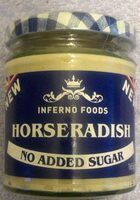
Horseradish
Unknown brand
Processing
4
Ultra-processed
Group 4 of 4 on the NOVA scale
Additives listed
3
1 we grade moderate or higher
Counted from the label, not by quantity
Salt per 100g
1.70g
High
UK FSA front of pack threshold
Three separate readings, kept apart on purpose. This is not a score, and none of it says this product is harmful.
Additives (3)
This label lists 1 colour, 1 preservative and 1 thickener or gelling agent.
E171
Titanium dioxide
Whitener and opacifier
What it is. A bright white pigment used to make sweets, icing, sauces and coatings look opaque and white.
Why it is used. Purely cosmetic. It changes appearance, not taste or safety of the food.
What the evidence says. In 2021 the EU food safety body EFSA concluded it could no longer be considered safe as a food additive, mainly because possible genetic damage from the tiny particles could not be ruled out. That is a precautionary call rather than proof of harm in people.
Banned as a food additive in the EU since 2022. Still permitted in the UK and the US, which reached different conclusions on the same evidence. A clear case of the same additive, different rules.
Assessed against EFSA, UK FSA, US FDA. Full entry for E171
E202
Potassium sorbate
Preservative
What it is. The potassium salt of sorbic acid, which stops mould and yeast growth.
Why it is used. Used in cheese, baked goods, dried fruit, wine and dressings.
What the evidence says. Widely used and long regarded as one of the gentler preservatives. EFSA's 2015 re-evaluation lowered the acceptable daily intake and noted gaps in the genotoxicity data, asking for more work, while finding no evidence of harm at the levels actually used.
Permitted with maximum levels. EFSA has asked for further data rather than restricted it.
Assessed against EFSA. Full entry for E202
E415
Xanthan gum
Thickener and stabiliser
What it is. A fibre made by fermenting sugars with a bacterium, which thickens liquids at very low doses.
Why it is used. Thickens sauces and dressings and gives structure to gluten free baking.
What the evidence says. Passes through largely undigested and is treated as safe by regulators, with no numerical intake limit. Very large amounts act as fibre does, which is a digestive effect rather than a safety one.
Permitted freely.
Assessed against EFSA, JECFA. Full entry for E415
Ingredients
horseradish (70%) [rehydrated (63%), fresh root (7%)], water, rapeseed oil, acidity requlator (acetic aaid), thickener (modified starch), salt, eggyolk powder, preservative (potassium sorbate), colour (titanium dioxide), stabiliser (xanthan gum). suitable for vegetarians and gluten free. refrigerate once openand consume within6weeks. stir before use. always seal capafteruse.
As printed on the pack, in the producer's own order: ingredients are listed by weight, so what comes first is most of what is in it. E numbers link to their assessment where we have one.