
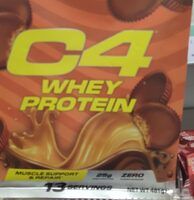
C4 Whey Protein Peanut Butter & Chocolate Flavour
Processing
4
Ultra-processed
Group 4 of 4 on the NOVA scale
Additives listed
5
0 we grade moderate or higher
Counted from the label, not by quantity
Fat per 100g
6.60g
Medium
UK FSA front of pack threshold
Three separate readings, kept apart on purpose. This is not a score, and none of it says this product is harmful.
Additives (5)
This label lists 2 sweeteners, 2 thickeners and gelling agents and 1 emulsifier.
E466
Carboxymethyl cellulose
Thickener and stabiliser
What it is. A modified plant fibre used to thicken and stabilise.
Why it is used. Common in ice cream, low fat products, gluten free bakery and sauces.
What the evidence says. Falls in the same emulsifier and gut research bucket as polysorbate 80, with early human work hinting at effects on the microbiome. Interesting, not conclusive.
Permitted with limits.
Assessed against EFSA. Full entry for E466
E950
Acesulfame K
Artificial sweetener
What it is. A calorie free intense sweetener, often blended with other sweeteners to round out taste.
Why it is used. Used in diet drinks, dairy and confectionery.
What the evidence says. Long treated as safe by regulators. Some recent research on sweeteners and the gut microbiome is ongoing, but nothing has changed the official safety position.
Permitted with an acceptable daily intake in all three regions.
Assessed against EFSA, JECFA. Full entry for E950
E955
Sucralose
Artificial sweetener
What it is. An intense sweetener made from sugar, around 600 times sweeter, so it is used in very small amounts.
Why it is used. Sweetens diet drinks, tabletop sweeteners, dairy and baked goods.
What the evidence says. Regulators have treated it as safe for decades and the acceptable daily intake has not changed. Newer laboratory work on a breakdown product, and the general question of sweeteners and the gut microbiome, keep it under discussion, but that work is early and has not moved any official position.
Permitted with an acceptable daily intake in all three regions.
Assessed against EFSA, JECFA. Full entry for E955
E322
Lecithin
Emulsifier
What it is. A natural emulsifier, usually from soya or sunflower.
Why it is used. Keeps chocolate smooth and stops ingredients separating.
What the evidence says. Safe and widely used. Only relevant if the source, such as soya, is an allergen for you.
Permitted freely. Source allergen must be declared.
Assessed against EFSA, JECFA. Full entry for E322
E415
Xanthan gum
Thickener and stabiliser
What it is. A fibre made by fermenting sugars with a bacterium, which thickens liquids at very low doses.
Why it is used. Thickens sauces and dressings and gives structure to gluten free baking.
What the evidence says. Passes through largely undigested and is treated as safe by regulators, with no numerical intake limit. Very large amounts act as fibre does, which is a digestive effect rather than a safety one.
Permitted freely.
Assessed against EFSA, JECFA. Full entry for E415
Ingredients
MILK Proteins (82%) (WHEY Protein Concentrate, WHEY Protein Isolate, Emulsifier Lecithins), PEANUT Flour (9%), Fat-Reduced Cocoa Powder (6%), Flavouring (MILK), Potassium Chloride, Sodium Chloride, Thickeners (Xanthan Gum, Cellulose Gum), Sweeteners (Acesulfame K, Sucralose)
As printed on the pack, in the producer's own order: ingredients are listed by weight, so what comes first is most of what is in it. E numbers link to their assessment where we have one.