
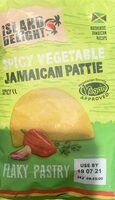
Spicy Vegetable Jamaican Patty
Processing
4
Ultra-processed
Group 4 of 4 on the NOVA scale
Additives listed
6
0 we grade moderate or higher
3 of them not yet assessed here
Fat per 100g
19g
High
UK FSA front of pack threshold
Three separate readings, kept apart on purpose. This is not a score, and none of it says this product is harmful.
Additives (6)
This label lists 3 colours, 2 preservatives and 1 flavour enhancer.
E202
Potassium sorbate
Preservative
What it is. The potassium salt of sorbic acid, which stops mould and yeast growth.
Why it is used. Used in cheese, baked goods, dried fruit, wine and dressings.
What the evidence says. Widely used and long regarded as one of the gentler preservatives. EFSA's 2015 re-evaluation lowered the acceptable daily intake and noted gaps in the genotoxicity data, asking for more work, while finding no evidence of harm at the levels actually used.
Permitted with maximum levels. EFSA has asked for further data rather than restricted it.
Assessed against EFSA. Full entry for E202
E100
Curcumin
Yellow colour
What it is. The yellow pigment from turmeric root.
Why it is used. Colours mustards, sauces, dairy, confectionery and savoury snacks.
What the evidence says. A plant pigment people have eaten as a spice for a very long time, and regulators treat it as safe with an acceptable daily intake. EFSA noted that children who eat a lot of the foods it is used in could approach that intake, which is a reason to watch total use rather than a sign of harm.
Permitted with maximum levels in the foods where it is allowed.
Assessed against EFSA, JECFA. Full entry for E100
E621
Monosodium glutamate
Flavour enhancer
What it is. The sodium salt of glutamate, an amino acid found naturally in tomatoes, cheese and mushrooms.
Why it is used. Boosts savoury, umami flavour in stocks, crisps, ready meals and sauces.
What the evidence says. The old idea of MSG causing headaches and flushing, once called Chinese restaurant syndrome, has not held up in controlled trials. Regulators worldwide treat it as safe at normal intake. A genuinely useful example of a feared additive that the evidence exonerates.
Permitted and classed as safe. Adds to total sodium, so it counts towards salt if a product uses a lot.
Assessed against EFSA, JECFA, US FDA. Full entry for E621
Also on the label, not assessed here yet
- E150C Ammonia caramel colour
- E160B Annatto, bixin, norbixin colour
- E282 Calcium propionate preservative
Names and jobs come from the register of additives permitted in Great Britain, which we have not finished transcribing: a code shown without a name is a gap in our coverage, not a finding that it is unapproved. Naming one is not grading it either. Full detail appears only where we have an assessment against a named authority, so all of this describes our coverage rather than these additives. Most are common and low concern.
Ingredients
Mixed vegetables (36%) (diced sweet potatoes, diced carrots, diced butternut squash, peas, diced onion, green beans broad beans, sweetcorn); Wheat flour (wheat flour, calcium carbonate, iron, niacin, folic acid, thiamin); Margarine (palm oil, salt, water); Vegetable fat (palm, rapeseed); Water, Seasoning mix (spices (contains mustard, celery), cornflour, salt, modified starch, flavour enhancer: monosodium glutamate; wheat flour (wheat flour, calcium carbonate, iron, niacin, thiamin), hydrolysed vegetable protein (soya), garlic powder, onion powder, herb, black pepper extract, colour: ammonia caramel), Sugar; Colours: annatto, curcumin; Salt; Garlic puree; Scotch bonnet chilli puree; Preservatives: calcium propionate, potassium sorbate.
As printed on the pack, in the producer's own order: ingredients are listed by weight, so what comes first is most of what is in it. E numbers link to their assessment where we have one.