
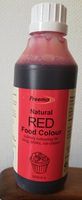
Natural Red food colour
Preema
Processing
4
Ultra-processed
Group 4 of 4 on the NOVA scale
Additives listed
2
0 we grade moderate or higher
Counted from the label, not by quantity
Nutrients
–
Nothing above the low band
Or no figures recorded at all
Three separate readings, kept apart on purpose. This is not a score, and none of it says this product is harmful.
Additives (2)
This label lists 1 colour and 1 emulsifier.
E433
Polysorbate 80
Emulsifier
What it is. A synthetic emulsifier that keeps oil and water mixed and smooth.
Why it is used. Used in ice cream, sauces and some bakery products.
What the evidence says. Part of a wider research question about whether certain emulsifiers disturb the gut lining and microbiome. Most of the evidence so far is from mice and lab models, not people, so it is an active area rather than a settled concern.
Permitted with limits.
Assessed against EFSA. Full entry for E433
E100
Curcumin
Yellow colour
What it is. The yellow pigment from turmeric root.
Why it is used. Colours mustards, sauces, dairy, confectionery and savoury snacks.
What the evidence says. A plant pigment people have eaten as a spice for a very long time, and regulators treat it as safe with an acceptable daily intake. EFSA noted that children who eat a lot of the foods it is used in could approach that intake, which is a reason to watch total use rather than a sign of harm.
Permitted with maximum levels in the foods where it is allowed.
Assessed against EFSA, JECFA. Full entry for E100
Ingredients
Eau, colorants (betterave, curcumine), monopropylène glycol, émulsifiant (polysorbate 80), acide ascorbique.
As printed on the pack, in the producer's own order: ingredients are listed by weight, so what comes first is most of what is in it. E numbers link to their assessment where we have one.