
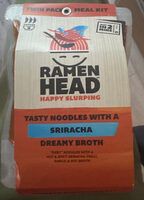
Ramen Head Sriracha Noodles
Processing
4
Ultra-processed
Group 4 of 4 on the NOVA scale
Additives listed
9
0 we grade moderate or higher
6 of them not yet assessed here
Salt per 100g
1.67g
High
UK FSA front of pack threshold
Three separate readings, kept apart on purpose. This is not a score, and none of it says this product is harmful.
Additives (9)
This label lists 2 acidity regulators, 2 flavour enhancers, 2 thickeners and gelling agents, 1 anticaking agent, 1 antioxidant and 1 preservative.
E211
Sodium benzoate
Preservative
What it is. A preservative that stops yeasts, moulds and some bacteria growing in acidic foods.
Why it is used. Used in soft drinks, sauces, pickles and dressings.
What the evidence says. EFSA re-evaluated it in 2016 and kept an acceptable daily intake, with normal exposure below it. The known issue is specific: in acidic drinks that also contain vitamin C, benzoate can form small amounts of benzene, so manufacturers reformulated to avoid the combination. It was also present in the drink mixes used in the Southampton hyperactivity study, though the warning requirement that followed applies to the colours rather than to benzoate.
Permitted with maximum levels in the foods where it is allowed.
Assessed against EFSA, UK FSA. Full entry for E211
E330
Citric acid
Acidity regulator
What it is. A mild acid found naturally in citrus fruit, made commercially by fermentation.
Why it is used. Adds tartness, balances flavour and helps preserve. One of the most used additives in food.
What the evidence says. Safe at food levels. No credible health concern for the additive itself.
Permitted freely.
Assessed against EFSA, JECFA. Full entry for E330
E415
Xanthan gum
Thickener and stabiliser
What it is. A fibre made by fermenting sugars with a bacterium, which thickens liquids at very low doses.
Why it is used. Thickens sauces and dressings and gives structure to gluten free baking.
What the evidence says. Passes through largely undigested and is treated as safe by regulators, with no numerical intake limit. Very large amounts act as fibre does, which is a digestive effect rather than a safety one.
Permitted freely.
Assessed against EFSA, JECFA. Full entry for E415
Also on the label, not assessed here yet
- E1422 Acetylated distarch adipate thickener
- E260 Acetic acid acidity regulator
- E319 Tertiary butylhydroquinone (TBHQ) antioxidant
- E551 Silicon dioxide anticaking agent
- E627 Disodium guanylate flavour enhancer
- E631 Disodium inosinate flavour enhancer
Names and jobs come from the register of additives permitted in Great Britain, which we have not finished transcribing: a code shown without a name is a gap in our coverage, not a finding that it is unapproved. Naming one is not grading it either. Full detail appears only where we have an assessment against a named authority, so all of this describes our coverage rather than these additives. Most are common and low concern.
Ingredients
Ramen: Cooked Noodles (99.65%) (Water, Durum Wheat Semolina), Sunflower Oil. Broth: Water (67.5%), Sriracha Sauce, (10.4%) (Vinegar (Water, Acetic Acid (E260)), Water, Red Chillies, Sugar, Garlic, Salt, Stabilizers (E1422, E415), Citric Acid (E330), Preservative (E211)), Tomato Paste (6.8%), Sesame Seed Oil (Sesame Oil, Antioxidant E319), Spring Onion (4.5%), Vegetable Broth (Salt, Corn Starch, Potato Powder, Onion, Maltodextrin, Sugar, Hydrolyzed Vegetable Protein (Wheat, Soy), Edible Vegetable Fat (Palm Fat), Yeast Extract, Garlic, Spices & Condiments (contains Celery), Flavour Enhancers (E627 & E631), Anticaking Agent (E551), Citric Acid (E330)), Garlic (1.4%), Ginger (1.4%), Soya Sauce (Sugar, Water, Soybean Extract (13%), Salt, Garlic Powder, Onion Powder, Spices & Condiments, Acidity Regulator (E260), Preservative (E211)), Vinegar (Water, Acetic Acid).
As printed on the pack, in the producer's own order: ingredients are listed by weight, so what comes first is most of what is in it. E numbers link to their assessment where we have one.