
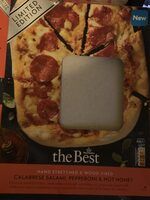
Calabrese Salami, Pepperoni & Hot Honey Pizza
Processing
4
Ultra-processed
Group 4 of 4 on the NOVA scale
Additives listed
8
1 we grade moderate or higher
4 of them not yet assessed here
Fat per 100g
8.47g
Medium
UK FSA front of pack threshold
Three separate readings, kept apart on purpose. This is not a score, and none of it says this product is harmful.
Additives (8)
This label lists 3 preservatives, 2 antioxidants, 1 acidity regulator, 1 colour and 1 thickener or gelling agent.
E250
Sodium nitrite
Preservative and colour fixer, cured meats
What it is. A curing salt that keeps cured and processed meats pink and stops the growth of the bacteria behind botulism.
Why it is used. Used in bacon, ham, salami and hot dogs for preservation, safety and colour.
What the evidence says. The concern is not the additive in isolation but processed meat as a whole, which the WHO's cancer agency IARC classes as Group 1, meaning there is sufficient evidence it causes colorectal cancer. Nitrite can form nitrosamines during curing and cooking, and those are the likely culprit. Risk rises with how much processed meat you eat over time.
Permitted with strict maximum levels. The EU cut the allowed limits further from 2023 to reduce nitrosamine formation.
Assessed against IARC, EFSA, UK FSA. Full entry for E250
E202
Potassium sorbate
Preservative
What it is. The potassium salt of sorbic acid, which stops mould and yeast growth.
Why it is used. Used in cheese, baked goods, dried fruit, wine and dressings.
What the evidence says. Widely used and long regarded as one of the gentler preservatives. EFSA's 2015 re-evaluation lowered the acceptable daily intake and noted gaps in the genotoxicity data, asking for more work, while finding no evidence of harm at the levels actually used.
Permitted with maximum levels. EFSA has asked for further data rather than restricted it.
Assessed against EFSA. Full entry for E202
E330
Citric acid
Acidity regulator
What it is. A mild acid found naturally in citrus fruit, made commercially by fermentation.
Why it is used. Adds tartness, balances flavour and helps preserve. One of the most used additives in food.
What the evidence says. Safe at food levels. No credible health concern for the additive itself.
Permitted freely.
Assessed against EFSA, JECFA. Full entry for E330
E415
Xanthan gum
Thickener and stabiliser
What it is. A fibre made by fermenting sugars with a bacterium, which thickens liquids at very low doses.
Why it is used. Thickens sauces and dressings and gives structure to gluten free baking.
What the evidence says. Passes through largely undigested and is treated as safe by regulators, with no numerical intake limit. Very large amounts act as fibre does, which is a digestive effect rather than a safety one.
Permitted freely.
Assessed against EFSA, JECFA. Full entry for E415
Also on the label, not assessed here yet
- E160C Paprika extract, capsanthin colour
- E252 Potassium nitrate preservative
- E301 Sodium ascorbate antioxidant
- E392 Extracts of rosemary antioxidant
Names and jobs come from the register of additives permitted in Great Britain, which we have not finished transcribing: a code shown without a name is a gap in our coverage, not a finding that it is unapproved. Naming one is not grading it either. Full detail appears only where we have an assessment against a named authority, so all of this describes our coverage rather than these additives. Most are common and low concern.
Ingredients
Wheat flour (wheat flour, calcium, folic acid, iron, niacin, thiamin), Mozzarella cheese (15%) (milk), Water, Tomato, Tomato passata, Calabrese salami (5%) (pork (96%), salt, dextrose, chilli powder, sweet pepper, white pepper, preservatives (potassium nitrate, sodium nitrite), antioxidant (sodium ascorbate), black pepper, garlic paste), Pepperoni (5%) (pork (96%), sea salt, salt, dextrose, paprika, cayenne pepper, antioxidants (sodium ascorbate, extracts of rosemary), garlic powder, paprika extract, pepper extract, preservative (sodium nitrite)), Hot honey (4%) (blossom honey (60%), water, concentrated apple juice, red chilli, cider vinegar, concentrated lemon juice, cornflour, garlic purée, salt, rapeseed oil, spirit vinegar, smoked paprika, chilli, stabiliser (xanthan gum), preservative (potassium sorbate)), Tomato purée, Rapeseed oil, Dried whole rye sourdough, Extra virgin olive oil, Yeast, Sugar, Salt, Cornflour, Basil, Garlic purée, Barley malt, Black pepper, Acidity regulator (citric acid).
As printed on the pack, in the producer's own order: ingredients are listed by weight, so what comes first is most of what is in it. E numbers link to their assessment where we have one.