
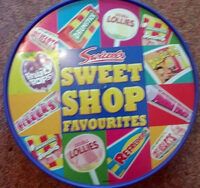
Sweet Shop Favourites
Processing
4
Ultra-processed
Group 4 of 4 on the NOVA scale
Additives listed
16
0 we grade moderate or higher
13 of them not yet assessed here
Sugars per 100g
87.60g
High
UK FSA front of pack threshold
Three separate readings, kept apart on purpose. This is not a score, and none of it says this product is harmful.
Additives (16)
This label lists 6 colours, 3 acidity regulators, 3 anticaking agents, 1 glazing agent, 1 preservative, 1 raising agent and 1 thickener or gelling agent.
E220
Sulphur dioxide and sulphites
Preservative
What it is. A preservative that stops browning and microbial growth.
Why it is used. Used in dried fruit, wine, some soft drinks and processed potato.
What the evidence says. Not a cancer concern, but a well established trigger for asthma symptoms and sensitivity in some people, which is why it is a declarable allergen. Clear, strong evidence, but the concern applies to a specific group rather than everyone.
Permitted, but must be declared on the label when above a small threshold because of the allergy risk.
Assessed against EFSA, UK FSA. Full entry for E220
E100
Curcumin
Yellow colour
What it is. The yellow pigment from turmeric root.
Why it is used. Colours mustards, sauces, dairy, confectionery and savoury snacks.
What the evidence says. A plant pigment people have eaten as a spice for a very long time, and regulators treat it as safe with an acceptable daily intake. EFSA noted that children who eat a lot of the foods it is used in could approach that intake, which is a reason to watch total use rather than a sign of harm.
Permitted with maximum levels in the foods where it is allowed.
Assessed against EFSA, JECFA. Full entry for E100
E330
Citric acid
Acidity regulator
What it is. A mild acid found naturally in citrus fruit, made commercially by fermentation.
Why it is used. Adds tartness, balances flavour and helps preserve. One of the most used additives in food.
What the evidence says. Safe at food levels. No credible health concern for the additive itself.
Permitted freely.
Assessed against EFSA, JECFA. Full entry for E330
Also on the label, not assessed here yet
- E141 Copper complexes of chlorophylls colour
- E160C Paprika extract, capsanthin colour
- E161B Lutein colour
- E162 Beetroot red, betanin colour
- E163 Anthocyanins colour
- E296 Malic acid acidity regulator
- E331 Sodium citrates acidity regulator
- E428 Gelatine thickener
- E500 Sodium carbonates raising agent
- E504 Magnesium carbonates anticaking agent
- E570 Fatty acids anticaking agent
- E572 Magnesium stearate anticaking agent
- E903 Carnauba wax glazing agent
Names and jobs come from the register of additives permitted in Great Britain, which we have not finished transcribing: a code shown without a name is a gap in our coverage, not a finding that it is unapproved. Naming one is not grading it either. Full detail appears only where we have an assessment against a named authority, so all of this describes our coverage rather than these additives. Most are common and low concern.
Ingredients
Sugar, Glucose Syrup, Acidity Regulators: Malic Acid, Citric Acid, Trisodium Citrate; Dextrose, Vegetable Oils (Palm, Palm Kernel, Stearic Acid, Modified Starch, Sodium Bicarbonate, Gelling Agent Gelatine; Flavourings, Magnesium Stearate, Cornflour, Anti-Caking Agent: Magnesium Carbonate; Emulsifier: Glycerol Mono Stearate; Apple Pulp (contains Preservative: Sulphur Dioxide), Lysed Soya Protein, Glazing Agents: Vegetable Oils (Palm. Palm Kernel, Coconuts), Carnauba wax; Colours: Anthocyanin, Beetroot Red, Copper Chlorophyllin, Curcumin, Lutein, Paprika Extract. Free from artificial colours
As printed on the pack, in the producer's own order: ingredients are listed by weight, so what comes first is most of what is in it. E numbers link to their assessment where we have one.