
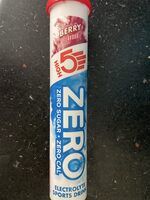
High Five Zero Electrolyte Berry
Processing
4
Ultra-processed
Group 4 of 4 on the NOVA scale
Additives listed
8
0 we grade moderate or higher
3 of them not yet assessed here
Nutrients
–
Nothing above the low band
Or no figures recorded at all
Three separate readings, kept apart on purpose. This is not a score, and none of it says this product is harmful.
Additives (8)
This label lists 3 colours, 3 sweeteners and 2 acidity regulators.
E420
Sorbitol
Sweetener and humectant
What it is. A sugar alcohol, about half as sweet as sugar, which also holds moisture.
Why it is used. Used in sugar free sweets and gum, and to keep baked goods soft.
What the evidence says. Not a toxicity question at all. Sugar alcohols are poorly absorbed, so a large amount draws water into the gut and has a laxative effect. That is well established, predictable and dose dependent, which is why the label has to say so.
Permitted. Foods with more than 10 per cent polyols must carry the statement that excessive consumption may produce laxative effects.
Assessed against EFSA, UK FSA. Full entry for E420
E955
Sucralose
Artificial sweetener
What it is. An intense sweetener made from sugar, around 600 times sweeter, so it is used in very small amounts.
Why it is used. Sweetens diet drinks, tabletop sweeteners, dairy and baked goods.
What the evidence says. Regulators have treated it as safe for decades and the acceptable daily intake has not changed. Newer laboratory work on a breakdown product, and the general question of sweeteners and the gut microbiome, keep it under discussion, but that work is early and has not moved any official position.
Permitted with an acceptable daily intake in all three regions.
Assessed against EFSA, JECFA. Full entry for E955
E100
Curcumin
Yellow colour
What it is. The yellow pigment from turmeric root.
Why it is used. Colours mustards, sauces, dairy, confectionery and savoury snacks.
What the evidence says. A plant pigment people have eaten as a spice for a very long time, and regulators treat it as safe with an acceptable daily intake. EFSA noted that children who eat a lot of the foods it is used in could approach that intake, which is a reason to watch total use rather than a sign of harm.
Permitted with maximum levels in the foods where it is allowed.
Assessed against EFSA, JECFA. Full entry for E100
E160A
Carotenes
Yellow to orange colour
What it is. The orange pigments found in carrots and other vegetables, either extracted or made synthetically.
Why it is used. Colours margarine, soft drinks, dairy, and sweets.
What the evidence says. The same compound the body turns into vitamin A, and safe at the levels used in food. High dose beta-carotene supplements have been linked to harm in smokers, but those doses are far above anything a colour in food delivers, and conflating the two is a common mistake.
Permitted. The supplement findings apply to concentrated doses, not to food colouring.
Assessed against EFSA, JECFA. Full entry for E160A
E330
Citric acid
Acidity regulator
What it is. A mild acid found naturally in citrus fruit, made commercially by fermentation.
Why it is used. Adds tartness, balances flavour and helps preserve. One of the most used additives in food.
What the evidence says. Safe at food levels. No credible health concern for the additive itself.
Permitted freely.
Assessed against EFSA, JECFA. Full entry for E330
Also on the label, not assessed here yet
- E162 Beetroot red, betanin colour
- E296 Malic acid acidity regulator
- E965 Maltitol sweetener
Names and jobs come from the register of additives permitted in Great Britain, which we have not finished transcribing: a code shown without a name is a gap in our coverage, not a finding that it is unapproved. Naming one is not grading it either. Full detail appears only where we have an assessment against a named authority, so all of this describes our coverage rather than these additives. Most are common and low concern.
Ingredients
s oline tesoss darf ncht uberschritten werden. auberhalb dla reichweite von kindern aufbewahren, zutaten saureregulatoren rlcne farestore (e162 e160a e100), naturliches aroma, l-ascorbinsaure, calgiumgarbonat, natriumchlorio, gruner tee-extrakt, kann bei ubermabigem verzehr yp caateeecis ach nahrungserganzungsm ttel mit sunur no wi 0-06bersiag bor ikke erstatte en varieret kost-skal ikke brukes som erstatning for et variert kosthold-bör inte anvăndas som ett alternativ till en varierad kost portione tablet. max portioner 3.overgkrid ke den aareralede daess oprevares utilgengeligt for born-daglig dose má ikke overskrides, oppbevares utilgjengelig for barn-överskrid inte den rekommenderade dağliga dosen. hall utom rackhall for barn ingredienser surhedsregulerende moler e3br e96rrumbkarbonat, sodestoffer sotningsmedel (e420, e955), magnesiumcarbonat, natriumcitrat, kaliumcitrat, naturlig farvestofferfärgamnensi6 o naturlig aroma, l-ascorbinsyre, kalsiumkarbonat, natriumklord, bistrat av gron e dierdreven indtagelse kan virke afforende-overdrevent forbruk kan ha en avforende effekt-överoriven konsumiion kan ha laneranbe efpeot. ilibe voedingssupplement met zoetstoffen bessen smaak net gebruiken als veruansing voor en gevareerdevoeding. portie: 1 tablet. maximaal aantal porties: 3. de aanbevolen dagelijkse dosis niet overschrijden. buiten het bereik van kinderen houden. ingredienten: zuurteregelaars (e330, e296). natriumbicarbonaat, 20etstoffen 68 b85) magnesumcarbonaat, natriumcitraat, kaliumcitraat, natuurlijke kleurstoffen je162, e160a, e100), natuurlijk aroma, l-ascorbinezuur, calciumcarbonaat, natriumchloride, groene thee extract. overmatig gebruik kan een lakerend effec herrel frvbe complement alimentaire avec édulcorants/ saveur de baies, ne doit pas servir de substitut à un régime alimentaire varié, portion: 1 0omprimé portions max: 3. ne pas dépasser la dose quotidienne recommandee tenir hors de portée des efants ingredents correcteurs d'acidité (e330, e295). bicarbonate de sodium, édulcorants (e420, e955) carbonate de magnésium, citrate de sodium, citrate de potassium, colorants naturels (e162. e160a e100). arome naturel acide l-ascorbigne carronate de caldum chlorure de sodium, extrait de thé vert. une consommation excessive peut avoir des effets laxatifs. es: complemento alimentario contiene edulcorantes/ sabor a frutas del bosque no utilizar como sustituto de una da variada radion 1 oomprimido porción maxima 3. no superar la dosis diaria recomendada. mantener fuera del alcance de los niños, ingredientes: correctores de la acidez (e330, e296), bicarbonato sodico, edulcorantes e20 e965 carbonato te magnesio citrato de sodio, citrato de potasio, colorante natural (e162. e160a e100), aroma natural acido l-ascórbico, carbonato de calcio, cloruro de sodio, extracto dẻ tế verde el consumo excesivo puede producir efectos lakantes dejatich dk/no/se nl/be fr/be es |uk pr. 4 9 %* uk: "reference intake se: "referensintag kindestens haltbar naringsindhold voedingswaarde vitamin c vitamine magaes info nutritiondnelle vitamine e info nutricional magniio nutrition info vitaminc bs a maindstholdbar t . 2-857 35% 35% de referenzmenge nreferentie-inname mg enceinetag
As printed on the pack, in the producer's own order: ingredients are listed by weight, so what comes first is most of what is in it. E numbers link to their assessment where we have one.