
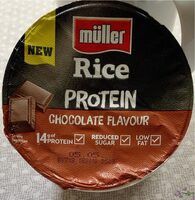
Rice Protein Chocolate Flavour
Processing
4
Ultra-processed
Group 4 of 4 on the NOVA scale
Additives listed
4
0 we grade moderate or higher
Counted from the label, not by quantity
Salt per 100g
0.32g
Medium
UK FSA front of pack threshold
Three separate readings, kept apart on purpose. This is not a score, and none of it says this product is harmful.
Additives (4)
This label lists 2 sweeteners and 2 thickeners and gelling agents.
E407
Carrageenan
Thickener and stabiliser
What it is. A gel forming fibre extracted from red seaweed.
Why it is used. Thickens dairy, plant milks, desserts and some processed meats.
What the evidence says. Food grade carrageenan is permitted. A degraded form called poligeenan is harmful, but that is not what goes into food. Some lab and animal work links carrageenan to gut inflammation, which keeps it under review, but human evidence is limited and mixed.
Permitted, including in organic food in many places, though a few specialist products avoid it as a precaution.
Assessed against EFSA, JECFA. Full entry for E407
E466
Carboxymethyl cellulose
Thickener and stabiliser
What it is. A modified plant fibre used to thicken and stabilise.
Why it is used. Common in ice cream, low fat products, gluten free bakery and sauces.
What the evidence says. Falls in the same emulsifier and gut research bucket as polysorbate 80, with early human work hinting at effects on the microbiome. Interesting, not conclusive.
Permitted with limits.
Assessed against EFSA. Full entry for E466
E950
Acesulfame K
Artificial sweetener
What it is. A calorie free intense sweetener, often blended with other sweeteners to round out taste.
Why it is used. Used in diet drinks, dairy and confectionery.
What the evidence says. Long treated as safe by regulators. Some recent research on sweeteners and the gut microbiome is ongoing, but nothing has changed the official safety position.
Permitted with an acceptable daily intake in all three regions.
Assessed against EFSA, JECFA. Full entry for E950
E951
Aspartame
Artificial sweetener
What it is. An intense sweetener around 200 times sweeter than sugar, used in tiny amounts.
Why it is used. Sweetens diet drinks, sugar free gum and low calorie desserts.
What the evidence says. In 2023 IARC listed it as possibly carcinogenic, its weakest evidence tier. At the same time the expert intake committee JECFA kept the safe daily limit unchanged, noting you would need a very high daily intake to approach it, roughly a dozen or more cans of diet drink a day for an adult. So headline scary, practically low concern for normal use.
Permitted with an acceptable daily intake. People with the condition PKU must avoid it, which is why packs carry a phenylalanine note.
Assessed against IARC, JECFA, EFSA. Full entry for E951
Ingredients
milk, buttermilk, water, rice (7%), milk, protein powder, modified maize starch, cocoa powder, chocolate (sugar, cocoa mass, fat reduced cocoa powder, flavouring), thickeners: carrageenan, cellulose gum, sweeteners: aspartame, acesulfame k, flavouring, contains a source of phenylalanine,
As printed on the pack, in the producer's own order: ingredients are listed by weight, so what comes first is most of what is in it. E numbers link to their assessment where we have one.