
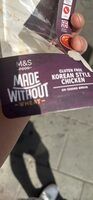
Korean Style Chicken on Seeded Bread
Processing
4
Ultra-processed
Group 4 of 4 on the NOVA scale
Additives listed
4
0 we grade moderate or higher
1 of them not yet assessed here
Sugars per 100g
620g
High
UK FSA front of pack threshold
Three separate readings, kept apart on purpose. This is not a score, and none of it says this product is harmful.
Additives (4)
This label lists 3 thickeners and gelling agents and 1 emulsifier.
E466
Carboxymethyl cellulose
Thickener and stabiliser
What it is. A modified plant fibre used to thicken and stabilise.
Why it is used. Common in ice cream, low fat products, gluten free bakery and sauces.
What the evidence says. Falls in the same emulsifier and gut research bucket as polysorbate 80, with early human work hinting at effects on the microbiome. Interesting, not conclusive.
Permitted with limits.
Assessed against EFSA. Full entry for E466
E471
Mono- and diglycerides of fatty acids
Emulsifier
What it is. Fat derived emulsifiers, closely related to ordinary dietary fats.
Why it is used. One of the most used additives in food: bread, margarine, ice cream, cakes and sauces.
What the evidence says. The body handles these much as it handles other fats, and EFSA's re-evaluation raised no safety concern at the levels used. They sit in the same broad emulsifier and gut microbiome research question as the others, which remains unsettled.
Permitted without a numerical limit. The fat source is not always stated, which matters for some diets rather than for safety.
Assessed against EFSA. Full entry for E471
E415
Xanthan gum
Thickener and stabiliser
What it is. A fibre made by fermenting sugars with a bacterium, which thickens liquids at very low doses.
Why it is used. Thickens sauces and dressings and gives structure to gluten free baking.
What the evidence says. Passes through largely undigested and is treated as safe by regulators, with no numerical intake limit. Very large amounts act as fibre does, which is a digestive effect rather than a safety one.
Permitted freely.
Assessed against EFSA, JECFA. Full entry for E415
Also on the label, not assessed here yet
- E464 Hydroxypropyl methyl cellulose thickener
Names and jobs come from the register of additives permitted in Great Britain, which we have not finished transcribing: a code shown without a name is a gap in our coverage, not a finding that it is unapproved. Naming one is not grading it either. Full detail appears only where we have an assessment against a named authority, so all of this describes our coverage rather than these additives. Most are common and low concern.
Ingredients
Roast Chicken Breast (22%) - Water Cucumber Cabbage Rapeseed Oil Seed Mix (Sunflower - Golden Linseed Millet Brown Linseed Poppy) Carrots. Tapioca Starch Butter (Milk) Bamboo Fibre Cornflour Rice Flour Potato Starch Stabiliser: E464, Xanthan Gum, Cellulose Gum, Calcium Carbonate Dried Egg White. Sugar Salt Psyllium Husk Powder Glucose Syrup. Vinegar Invert Sugar Syrup Rice Wine Vinegar Fructose. Pasteurised Egg Yolk White Wine Vinegar Garlic Purée Chilli Purée Black Beans Yeast (Yeast Vitamin D Yeast). Lemon Juice Concentrated Red Pepper Juice - Soybeans Chicken Stock (Water Chicken Bones Chicken Skin. Seaweed Yeast Extract Shiitake Mushrooms - Salt. Sugar) Concentrated Onion Juice Dried Onions - Ground Cayenne Pepper Caramelised Sugar Ground Paprika • W Dried Tomatoes Natural Colour: Paprika Extract Emulsifier: E471 - Quinoa Flour Vegetable Oil (Sunflower/Rapeseed). Vitamins (Folic Acid Niacin Pantothenic Acid Riboflavín. Vitamin B6).
As printed on the pack, in the producer's own order: ingredients are listed by weight, so what comes first is most of what is in it. E numbers link to their assessment where we have one.