
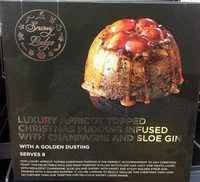
Luxury appricot topped Christmas pudding infused with Champagne and Sloe Gin
Snowy Lodge
Processing
4
Ultra-processed
Group 4 of 4 on the NOVA scale
Additives listed
6
1 we grade moderate or higher
2 of them not yet assessed here
Sugars per 100g
45.70g
High
UK FSA front of pack threshold
Three separate readings, kept apart on purpose. This is not a score, and none of it says this product is harmful.
Additives (6)
This label lists 2 colours, 1 acidity regulator, 1 emulsifier, 1 additive and 1 preservative.
E171
Titanium dioxide
Whitener and opacifier
What it is. A bright white pigment used to make sweets, icing, sauces and coatings look opaque and white.
Why it is used. Purely cosmetic. It changes appearance, not taste or safety of the food.
What the evidence says. In 2021 the EU food safety body EFSA concluded it could no longer be considered safe as a food additive, mainly because possible genetic damage from the tiny particles could not be ruled out. That is a precautionary call rather than proof of harm in people.
Banned as a food additive in the EU since 2022. Still permitted in the UK and the US, which reached different conclusions on the same evidence. A clear case of the same additive, different rules.
Assessed against EFSA, UK FSA, US FDA. Full entry for E171
E220
Sulphur dioxide and sulphites
Preservative
What it is. A preservative that stops browning and microbial growth.
Why it is used. Used in dried fruit, wine, some soft drinks and processed potato.
What the evidence says. Not a cancer concern, but a well established trigger for asthma symptoms and sensitivity in some people, which is why it is a declarable allergen. Clear, strong evidence, but the concern applies to a specific group rather than everyone.
Permitted, but must be declared on the label when above a small threshold because of the allergy risk.
Assessed against EFSA, UK FSA. Full entry for E220
E322
Lecithin
Emulsifier
What it is. A natural emulsifier, usually from soya or sunflower.
Why it is used. Keeps chocolate smooth and stops ingredients separating.
What the evidence says. Safe and widely used. Only relevant if the source, such as soya, is an allergen for you.
Permitted freely. Source allergen must be declared.
Assessed against EFSA, JECFA. Full entry for E322
E330
Citric acid
Acidity regulator
What it is. A mild acid found naturally in citrus fruit, made commercially by fermentation.
Why it is used. Adds tartness, balances flavour and helps preserve. One of the most used additives in food.
What the evidence says. Safe at food levels. No credible health concern for the additive itself.
Permitted freely.
Assessed against EFSA, JECFA. Full entry for E330
Also on the label, not assessed here yet
- E163 Anthocyanins colour
- E422 Glycerol other
Names and jobs come from the register of additives permitted in Great Britain, which we have not finished transcribing: a code shown without a name is a gap in our coverage, not a finding that it is unapproved. Naming one is not grading it either. Full detail appears only where we have an assessment against a named authority, so all of this describes our coverage rather than these additives. Most are common and low concern.
Ingredients
sultanas 21%, sugar, raisins 9%, fortified wheat flour (_wheat_ flour, calcium carbonate, iron, niacin, thiamin), thatchers cider 9%, apricot halves, golden syrup 5% (inverted sugar syrup, water, cornflour), vegetable suet (palm oil, rice flour, sunflower oil), glacé cherries 3% (cherries, glucose-fructose syrup, colour: anthocyanins, acid: citric acid, preservative: _sulphur dioxide_), single cream (_milk_), sherry 3%, humectant: vegetable glycerol, Champagne 1.5%, treacle, Sloe Gin 1%, orange vermicelli (orange peel, sucrose, lemon, juice from concentrate), _Barley_ malt extract, orange and lemon peel, candied citrus peel (glucose syrup, orange peel), sugar, lemon peel, acid: citric acid), salt, mixed spice (coriander, cinnamon, clove, fennel, ginger, nutmeg, cardamom), colours: titanium dioxide, iron oxide and hudroxides, flavouring, yeast, orange oil, lemon oil, emulsifier: _soya_ lecithins.
As printed on the pack, in the producer's own order: ingredients are listed by weight, so what comes first is most of what is in it. E numbers link to their assessment where we have one.