
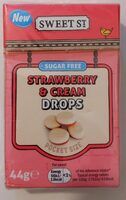
Sugar free Strawberry & Cream drops
Processing
4
Ultra-processed
Group 4 of 4 on the NOVA scale
Additives listed
7
1 we grade moderate or higher
4 of them not yet assessed here
Fat per 100g
6.50g
Medium
UK FSA front of pack threshold
Three separate readings, kept apart on purpose. This is not a score, and none of it says this product is harmful.
Additives (7)
This label lists 2 acidity regulators, 2 colours, 2 sweeteners and 1 emulsifier.
E171
Titanium dioxide
Whitener and opacifier
What it is. A bright white pigment used to make sweets, icing, sauces and coatings look opaque and white.
Why it is used. Purely cosmetic. It changes appearance, not taste or safety of the food.
What the evidence says. In 2021 the EU food safety body EFSA concluded it could no longer be considered safe as a food additive, mainly because possible genetic damage from the tiny particles could not be ruled out. That is a precautionary call rather than proof of harm in people.
Banned as a food additive in the EU since 2022. Still permitted in the UK and the US, which reached different conclusions on the same evidence. A clear case of the same additive, different rules.
Assessed against EFSA, UK FSA, US FDA. Full entry for E171
E955
Sucralose
Artificial sweetener
What it is. An intense sweetener made from sugar, around 600 times sweeter, so it is used in very small amounts.
Why it is used. Sweetens diet drinks, tabletop sweeteners, dairy and baked goods.
What the evidence says. Regulators have treated it as safe for decades and the acceptable daily intake has not changed. Newer laboratory work on a breakdown product, and the general question of sweeteners and the gut microbiome, keep it under discussion, but that work is early and has not moved any official position.
Permitted with an acceptable daily intake in all three regions.
Assessed against EFSA, JECFA. Full entry for E955
E322
Lecithin
Emulsifier
What it is. A natural emulsifier, usually from soya or sunflower.
Why it is used. Keeps chocolate smooth and stops ingredients separating.
What the evidence says. Safe and widely used. Only relevant if the source, such as soya, is an allergen for you.
Permitted freely. Source allergen must be declared.
Assessed against EFSA, JECFA. Full entry for E322
Also on the label, not assessed here yet
- E160C Paprika extract, capsanthin colour
- E270 Lactic acid acidity regulator
- E325 Sodium lactate acidity regulator
- E953 Isomalt sweetener
Names and jobs come from the register of additives permitted in Great Britain, which we have not finished transcribing: a code shown without a name is a gap in our coverage, not a finding that it is unapproved. Naming one is not grading it either. Full detail appears only where we have an assessment against a named authority, so all of this describes our coverage rather than these additives. Most are common and low concern.
Ingredients
Sweeteners: Isomalt, Sucralose; 6% Cream (Milk), Butter (Milk), Acids: Lactic Acid, Sodium Lactate; Palm Fat, Colours: Titanium Dioxide, Paprika Extract; Emulsifier: Soya Lecithins; Salt, Natural Flavouring, Natural Strawberry Flavouring with other Natural Flavouring (contains Caffeine), Concentrated Fruit Juices (Elderberry, Strawberry).
As printed on the pack, in the producer's own order: ingredients are listed by weight, so what comes first is most of what is in it. E numbers link to their assessment where we have one.