
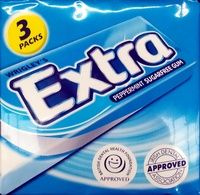
Extra Gum - Peppermint
Processing
4
Ultra-processed
Group 4 of 4 on the NOVA scale
Additives listed
9
1 we grade moderate or higher
6 of them not yet assessed here
Nutrients
–
Nothing above the low band
Or no figures recorded at all
Three separate readings, kept apart on purpose. This is not a score, and none of it says this product is harmful.
Additives (9)
This label lists 5 sweeteners, 1 antioxidant, 1 colour, 1 glazing agent and 1 additive.
E320
BHA (butylated hydroxyanisole)
Antioxidant
What it is. A synthetic antioxidant that stops fats and oils going rancid.
Why it is used. Used in some fatty foods, snacks and chewing gum.
What the evidence says. IARC lists it as possibly carcinogenic based mainly on high dose animal studies. Human relevance at food levels is uncertain, and it is used in small amounts, but it is one to watch rather than dismiss.
Permitted with limits. Its use has declined as makers switch to natural antioxidants like vitamin E.
Assessed against IARC, EFSA. Full entry for E320
E950
Acesulfame K
Artificial sweetener
What it is. A calorie free intense sweetener, often blended with other sweeteners to round out taste.
Why it is used. Used in diet drinks, dairy and confectionery.
What the evidence says. Long treated as safe by regulators. Some recent research on sweeteners and the gut microbiome is ongoing, but nothing has changed the official safety position.
Permitted with an acceptable daily intake in all three regions.
Assessed against EFSA, JECFA. Full entry for E950
E951
Aspartame
Artificial sweetener
What it is. An intense sweetener around 200 times sweeter than sugar, used in tiny amounts.
Why it is used. Sweetens diet drinks, sugar free gum and low calorie desserts.
What the evidence says. In 2023 IARC listed it as possibly carcinogenic, its weakest evidence tier. At the same time the expert intake committee JECFA kept the safe daily limit unchanged, noting you would need a very high daily intake to approach it, roughly a dozen or more cans of diet drink a day for an adult. So headline scary, practically low concern for normal use.
Permitted with an acceptable daily intake. People with the condition PKU must avoid it, which is why packs carry a phenylalanine note.
Assessed against IARC, JECFA, EFSA. Full entry for E951
Also on the label, not assessed here yet
- E170 Calcium carbonate colour
- E421 Mannitol sweetener
- E422 Glycerol other
- E903 Carnauba wax glazing agent
- E962 Aspartame-acesulfame salt sweetener
- E965 Maltitol sweetener
Names and jobs come from the register of additives permitted in Great Britain, which we have not finished transcribing: a code shown without a name is a gap in our coverage, not a finding that it is unapproved. Naming one is not grading it either. Full detail appears only where we have an assessment against a named authority, so all of this describes our coverage rather than these additives. Most are common and low concern.
Ingredients
INGHEDIENTS; SWEETENERS SOHBITOL, MALTITOL, MALTITOL SYRUR MANNITOL, ASPARTAME, SAU OF ASPARTAME ACESULFAME, ACESULFAME K; GUM BASE (CONTAINS SOYBEAN LECNHIN), GLAZING AGENT CALCIUM CARBONATE, HUMEGTANT GLYCEROL, ïH|CKENER GUM AHABIC, FIAVOURINGS, COLOUR EW1, (ÈL,’*1!NG AGENT CARNAUBA WAX, ANTIOXIDANT BHA. CONTAINS A SOURCE OF PHENYLALANINE. EXCESSIVE CONSUMPTIUN MAY PRUDUCE LAXATIVE
As printed on the pack, in the producer's own order: ingredients are listed by weight, so what comes first is most of what is in it. E numbers link to their assessment where we have one.